Quick Answer
Women in Telangana celebrate Bathukamma with flowers to honour Goddess Gauri, celebrate nature's abundance, express gratitude for life and harvest, and strengthen community bonds. The nine-day festival is a symbol of Telangana's cultural identity and the close relationship between people, land and water.
The Story
Bathukamma is one of Telangana's most distinctive festivals, celebrated during September and October, around the Navratri period. It arrives towards the end of the monsoon, when seasonal wildflowers bloom across the region.
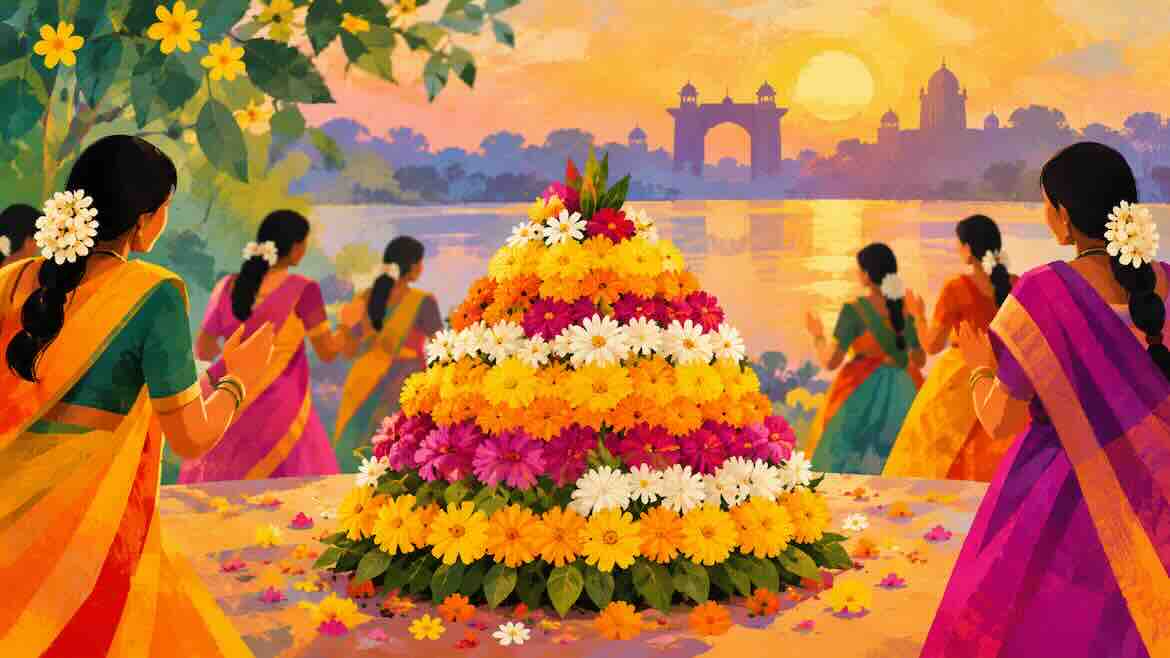
Women collect colourful flowers such as tangedu (Tanner's Cassia), gunugu, marigolds and chrysanthemums. These flowers are carefully arranged in concentric layers on a brass plate called a taambalam, creating a colourful, tiered structure known as Bathukamma.
The name is commonly interpreted as "Mother Goddess, come alive" or "Live, Mother". The festival honours Goddess Gauri, a form of Goddess Parvati, and expresses prayers for well-being, prosperity and a fulfilling life.
A popular legend connects Bathukamma with a royal couple who lost their hundred sons and prayed to Goddess Lakshmi for a daughter. The goddess was born as a princess named Bathukamma, who loved flowers. This story is one traditional explanation of the festival's origins; its historical beginnings are not established by a single account.
The celebrations continue for nine days, with each day associated with a distinct name and food offering. Women gather in courtyards or community spaces, place their floral arrangements together, and sing traditional folk songs while moving in circles around them. These gatherings create opportunities for women of different generations to share songs, customs and companionship.
The festival culminates in Saddula Bathukamma. Women carry their floral arrangements in processions and immerse them in nearby ponds, lakes or other water bodies, according to local customs.
Flowers are central to the celebration for another reason: they reflect the seasonal landscape of Telangana. The festival acknowledges the abundance that follows the rains and reminds people of their dependence on nature. Bathukamma is therefore both a devotional celebration and a cultural expression of gratitude for the land and its resources.
Did You Know?
- Tangedu is Telangana's state flower. It is also one of the most recognisable flowers used in Bathukamma arrangements.
- The festival has nine days of celebrations. The daily observances have different names and traditional food offerings.
- Bathukamma songs preserve local memory. Their themes can include mythology, history, everyday life and social developments.
- The festival marks a seasonal transition. It takes place as the monsoon draws to a close and the cooler season approaches.
Why It Matters
Bathukamma shows how a regional tradition can connect devotion, ecology, art and community life. Women play a central role in preserving its songs, floral arrangements and rituals, passing them on to younger generations.
Beyond its religious meaning, the festival celebrates the value of local flowers, shared cultural spaces and gratitude for nature. It remains a powerful expression of Telangana's identity and the enduring role of women in keeping traditions alive.
References
- Telangana Tourism, Government of Telangana: Festivals and Fairs - Bathukamma
- Government of India, Incredible India: Bathukamma Floral Festival
- Telangana Government: State Symbols - Tangedu Flower
- Ministry of Tourism, Government of India: Bathukamma Festival