Quick Answer
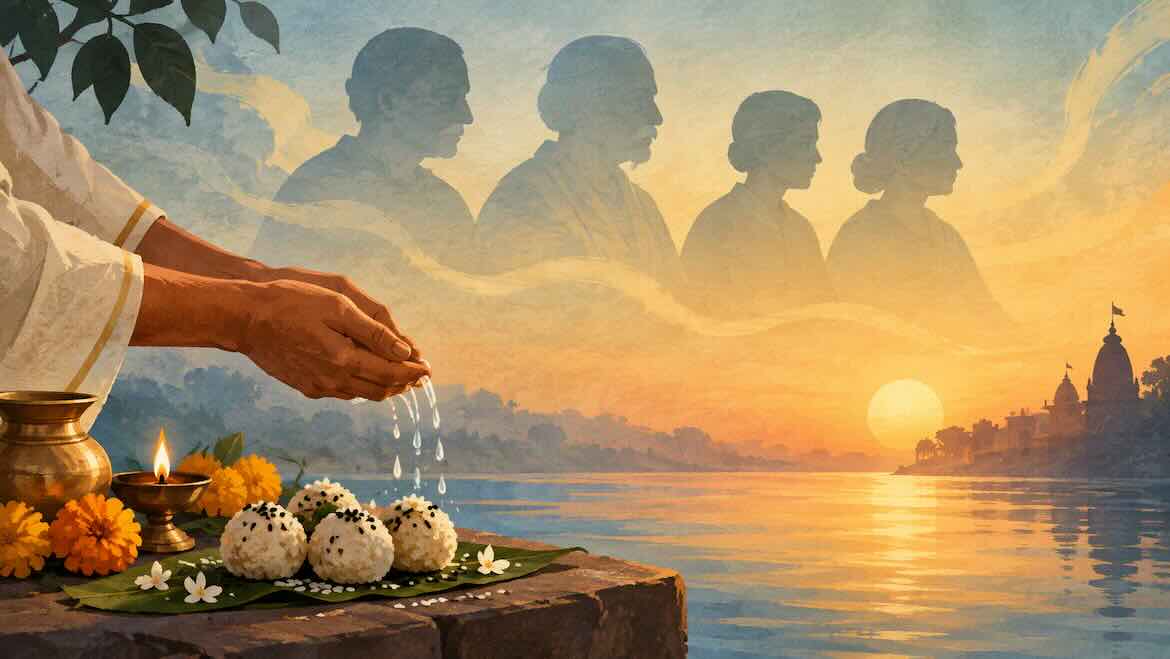
Hindus perform Shradh during Pitru Paksha to honour and remember their ancestors, known as Pitrs. The period is traditionally considered especially suitable for offering water, food, sesame, pindas, prayers and charity in their memory. It represents gratitude towards those whose lives made the present generation possible.
The Story
The practice of Shradh is much older than the popular stories associated with Pitru Paksha.
The Mahabharat's Anushasan Parva tells a story about Sage Nimi. After his son Shrimat died, Nimi was overcome with grief. He gathered food and other offerings and, on the new-moon day, invited learned Brahmanas and performed a rite in memory of his son. When Nimi wondered whether he had done something unprecedented, Sage Atri explained that the rite was connected with the ancient Pitru Yajna, an established offering to the ancestors. The story is one of the Mahabharat's explanations of how Shradh came to be performed.
The Mahabharat then describes how other sages adopted the practice and offered food and water to the Pitrs. Anushasana Parva contains an extended discussion between Yudhishthir and Bhishma about Shradh and offerings to the Pitrs. Bhishma explains what foods and offerings are traditionally given to ancestors and discusses the different occasions and lunar constellations considered suitable for performing Shradh. He also describes how he himself performed Shradh for his father, King Shantanu, at Gangadwara.
Another story, widely associated with Pitru Paksha, concerns Karna, the great giver of the Mahabharat. According to this later popular tradition, after Karna reached heaven, he found himself surrounded by gold and precious objects instead of food. He was told that although he had generously donated wealth during his life, he had not made food offerings to his ancestors. He was therefore allowed to return to Earth for a period and perform Shradh.
There is an important distinction here: the Karna story is popular in later tradition, but it is not found in the extant Mahabharat in this form. The Mahabharat itself gives the Nimi story as an origin account for Shradh.
When Does Pitru Paksha Fall?
In the commonly followed Hindu lunar calendar, Pitru Paksha is the dark fortnight leading up to the new moon of the Ashwin month. Depending on whether a regional calendar follows the Purnimanta or Amanta system, the same period can be described using different month names. This is why calendars may sometimes appear to place Pitru Paksha in Bhadrapad or Ashwin.
The Garuda Purana specifically describes the dark fortnight of Bhadra as Pretapaksha, a period associated with performing Shradh for departed ancestors. Other texts also prescribe Shradh on Amavasya and on several other specific lunar days.
Pitru Paksha therefore became a concentrated period for remembering ancestors. Hindu texts also prescribe ancestral rites at other times. The Manusmriti, for example, describes monthly Shradh on Amavasya and considers several days of the waning fortnight particularly suitable for ancestral rites.
Did You Know?
The word Shradh is connected with shraddha, meaning faith or sincerity. The ritual is therefore traditionally understood as an offering made with sincere respect, rather than merely a ceremony performed mechanically.
Why It Matters
Pitru Paksha teaches a simple idea that we are part of a chain of generations.
Remembering ancestors encourages gratitude for what we have received, responsibility for the family we have inherited, and a sense of duty to those who will come after us.
The ritual may involve water, food, pindas and charity, but its deeper cultural message is remembrance: do not forget the people because of whom you are here.
References
- Mahabharat
- Anushasan Parva, Sections 84-92: Bhishma's detailed teachings on Shradh, offerings to the Pitrs, suitable occasions and the story of Sage Nimi.
- Anushasan Parva, Section 84: Bhishma describes performing Shradh for his father, King Shantanu.
- Anushasan Parva, Sections 88-89: Bhishma discusses offerings made during Shradh and different times and lunar constellations considered suitable.
- Garuda Purana
- Chapter 99: Describes Shradh occasions and specifically refers to the dark fortnight of Bhadra as Pretapaksha.
- Manusmriti
- Chapter 3, Verses 122 and 276: Describes regular ancestral Shradh and suitable periods for such rites.
- Chapter 3, Verse 267: Describes traditional offerings including sesame, rice, barley, water, roots and fruits.