Quick Answer
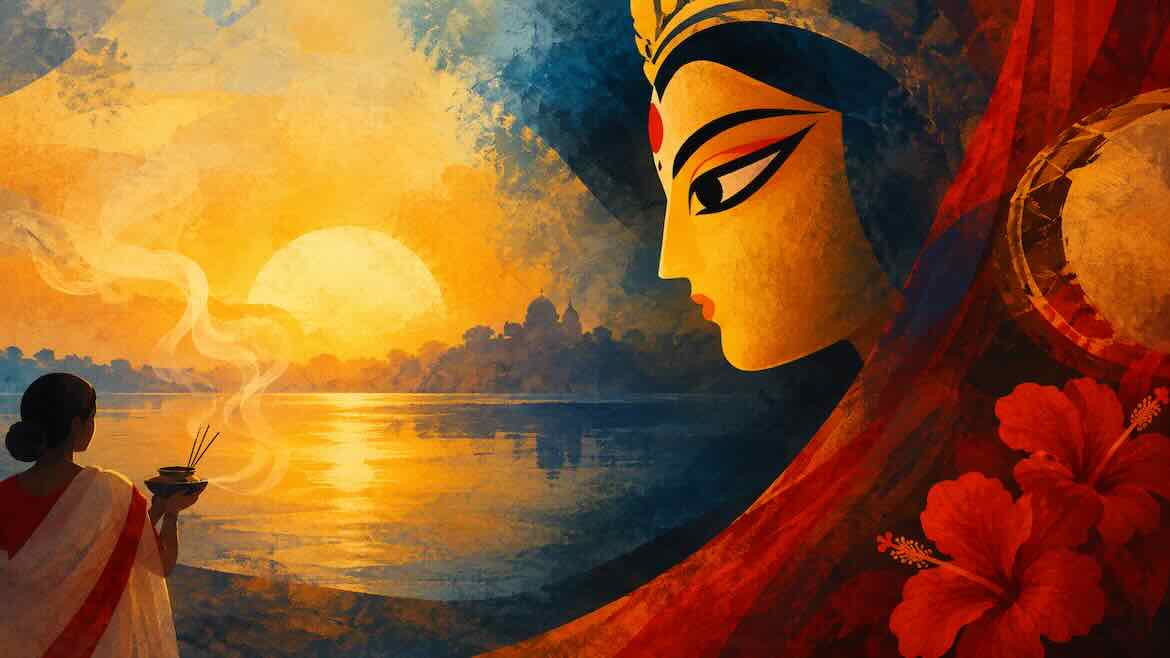
Mahalaya marks the end of Pitru Paksha and the beginning of Devi Paksha, the fortnight associated with the Goddess. In Bengal, it is traditionally regarded as the beginning of the Durga Puja season because it marks the symbolic arrival or awakening of Goddess Durga and begins the countdown to the main Puja.
However, the formal Durga Puja rituals begin later, on Shashthi. Mahalaya is therefore better understood as the cultural and spiritual beginning of the festival rather than the first day of the main Puja.
The Story
The significance of Mahalaya is closely connected with the worship of Goddess Durga and the autumn festival known as Sharadiya Durga Puja.
According to the Devi Mahatmya, part of the Markandeya Purana, Goddess Durga appears as the divine power who defeats the buffalo demon Mahishasur and restores balance in the world. The battle and her victory form one of the central stories behind Durga worship.
But Bengal has another important tradition explaining why Durga is worshipped in autumn.
In the Krittivasi Ramayan, a medieval Bengali retelling of the Ramayan, Ram prepares to fight Raavan and invokes Goddess Durga for her blessings. Traditionally, Devi worship was associated with spring, so Ram's autumn invocation is called Akal Bodhan, meaning an untimely or out-of-season awakening of the Goddess.
Ram had prepared 108 blue lotuses for the worship. When one lotus was found missing, he decided to offer one of his own eyes, remembering that he was known as lotus-eyed. Moved by his devotion, Durga appeared before him, stopped him and blessed him with victory.
This episode is important to Bengal's autumnal Durga Puja tradition. It should, however, be understood as a later Bengali Ramayan tradition, not as an episode found in the Valmiki Ramayan.
Mahalaya comes just before the main Puja. It concludes Pitru Paksha, when ancestors are remembered through rituals such as tarpan, and marks the beginning of Devi Paksha. Thus, the mood changes from remembrance of ancestors to anticipation of the Goddess.
Did You Know?
- The pre-dawn recitation of Mahishasur Mardini, based largely on verses from the Devi Mahatmya, has made this transition an especially powerful part of Bengali culture.
- The famous Mahishasur Mardini radio broadcast, associated with the voice of Birendra Krishna Bhadra, became a defining Mahalaya tradition in Bengal during the twentieth century.
Why It Matters
Mahalaya represents a transition from remembering those who came before us to welcoming divine strength and renewal.
It also shows how Indian traditions grow through different layers of scripture, regional retellings and living cultural practices. For millions of Bengalis, hearing the chants before sunrise is not merely a religious ritual. It is the moment when Durga Puja truly begins in the heart.
References
- Markandeya Purana
- Devi Mahatmya, Chapters 81-93: Goddess Durga's manifestations and her victory over Mahishasur, especially Chapters 82-84.
- Krittivasi Ramayan
- Lanka Kand: The Bengali tradition of Ram's autumn worship of Durga, known as Akal Bodhan.
- Valmiki Ramayan
- Yuddha Kand, Sarga 107: Ram's recitation of the Aditya Hridaya before the final battle. The Valmiki text does not contain the later Bengali story of Ram worshipping Durga.
- Ramcharitmanas
- Lanka Kand: The battle between Ram and Raavan, but not the Bengali Mahalaya/Akal Bodhan episode.