Quick Answer
Onam is Kerala's most prominent cultural festival because it brings together the legendary homecoming of King Mahabali (also known as Bali in Valmiki Ramayan) with the joy of the harvest season. Celebrated over ten days in the Malayalam month of Chingam (August-September), Onam is marked by Pookkalam, Onasadya, boat races, traditional dances, games and community celebrations.
The Story
The central legend of Onam begins with Mahabali, a powerful and generous Asura king and grandson of Prahlad. Tradition remembers his reign as a golden age when his people lived with prosperity and happiness.
Mahabali's growing power eventually concerned the devas. Lord Vishnu appeared before him as Vaaman, a young Brahmin, and asked for only three paces of land. Mahabali agreed.
Vaaman then assumed a cosmic form. With his first step, he covered the earth; with the second, the heavens. There was nowhere left for the third step. Mahabali, true to his promise, offered his own head.
Pleased by his humility and devotion, Vishnu granted Mahabali permission to return and meet his beloved people once every year. Kerala's Onam tradition celebrates this symbolic homecoming, especially on Thiruvonam, the tenth and most important day. The story is described in the Bhagavat Purana, particularly Skandha 8, Chapters 18-23.
In the Valmiki Ramayan, Brahmarshi Vishvamitra narrates to Ram and Lakshman the story of Siddhashram and its association with Lord Vaaman. He then recounts how Vaaman approached King Bali during his yajna and asked for three paces of land.
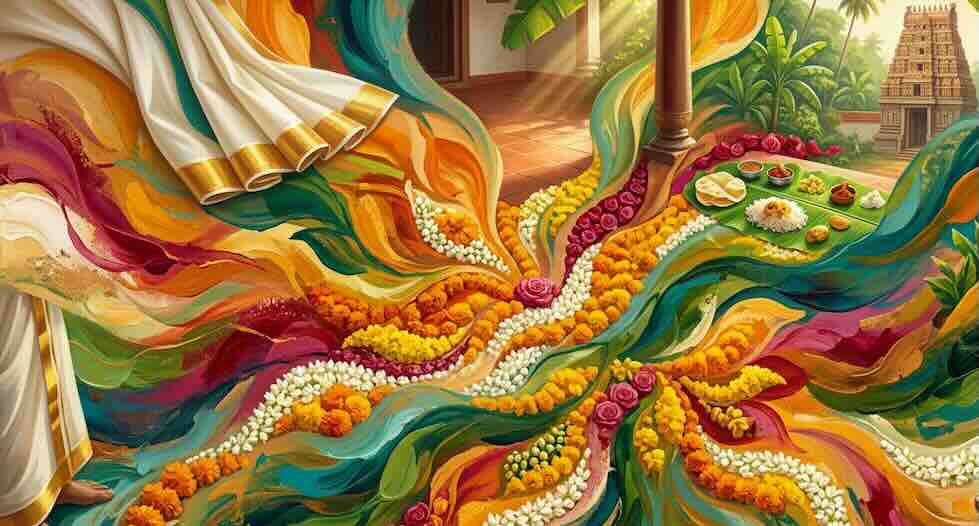
But Onam is more than mythology. It is also a harvest festival, arriving after the monsoon season when Kerala's agricultural cycle brings hopes of abundance. Homes are decorated with colourful Pookkalam (floral carpets), families prepare the elaborate Onasadya, and communities celebrate through Vallamkali boat races, Pulikali, folk performances and other traditions.
Did You Know?
- Thiruvonam is the tenth and principal day of the traditional ten-day Onam celebrations.
- The famous Vallamkali, or snake-boat race, is one of Onam's best-known cultural events.
- Pulikali is a colourful, traditional tiger dance performed in Kerala. People paint their bodies like tigers and dance through the streets to traditional drum beats.
- The grand vegetarian feast of Onam is called Onasadya and commonly includes numerous traditional dishes served together.
- In North Malabar, Onapottan Theyyam represents Mahabali and visits homes during the festival.
Why It Matters
Onam represents a remarkable blend of story, agriculture and culture. The Mahabali legend connects people with ideals of generosity, humility and good governance, while the harvest traditions celebrate nature and prosperity.
Its greatest strength is perhaps its ability to bring people together. The festival has evolved into a broad cultural celebration of Kerala, where food, art, family gatherings and community participation matter as much as the legend itself.
References
- Bhagavat Purana
- Skandha 8, Chapters 18-23: Birth and appearance of Vaaman, his meeting with Mahabali, the three steps, Mahabali's surrender and the subsequent events.
- Valmiki Ramayan
- Bal Kand, Sargas 29-30: Vishvamitra's narration of Siddhashram, Vaaman, and King Bali
- Kerala Tourism, Government of Kerala: "Legend of Mahabali" and official Onam cultural resources.
- Ministry of Tourism, Government of India: Thiruvonam festival description and traditions.