Quick Answer
Shiva chose Kashi, also known as Varanasi or Banaras, as his abode after descending from Mount Kailash. Ancient texts such as the Kashi Khanda describe it as Avimukta, the place never abandoned by Shiva. This title is rooted primarily in religious belief, while historical evidence confirms Kashi's importance as one of India's oldest continuously inhabited sacred cities.
The Story
According to the Kashi Khanda of the Skanda Purana, Lord Shiva chose Kashi as his eternal residence. The city is described as Avimukta, meaning "the place never abandoned." The belief is that even when cosmic cycles change, Shiva remains spiritually present in Kashi. This idea became central to the city's identity.
A second reason is connected with the concept of moksha (liberation). Hindu tradition holds that Shiva himself grants the Taraka Mantra to sincere souls who die in Kashi, helping them attain liberation from the cycle of birth and death. Because of this belief, Kashi became one of the most important pilgrimage destinations in India, especially for those seeking spiritual fulfilment in the final stage of life.
The city's geography also contributed to its association with Shiva. Ancient tradition identifies the sacred area between the rivers Varuna and Asi, from which the name Varanasi is derived. Within this sacred boundary are hundreds of Shiva shrines, with Kashi Vishwanath (Lord of the Universe) regarded as the spiritual centre. Historically, pilgrims performed the Panchakroshi Yatra, a ritual circumambulation that connects numerous Shiva temples across the sacred landscape, reinforcing the idea that the entire city belongs to Shiva rather than a single temple complex. While the present Kashi Vishwanath Temple was rebuilt in the eighteenth century by Queen Ahilyabai Holkar, the worship of Vishweshwar Shiva in Kashi is far older.
Another distinctive feature is that daily life itself is intertwined with Shiva worship. The ringing of temple bells, chanting of "Har Har Mahadev," cremation rites at Manikarnika Ghat, ascetics devoted to Shiva, and festivals such as Mahashivaratri make Shiva a constant presence in the city's spiritual atmosphere. Few cities in the world have a deity so deeply woven into their urban life, rituals, sacred geography, and cultural memory.
The Architecture
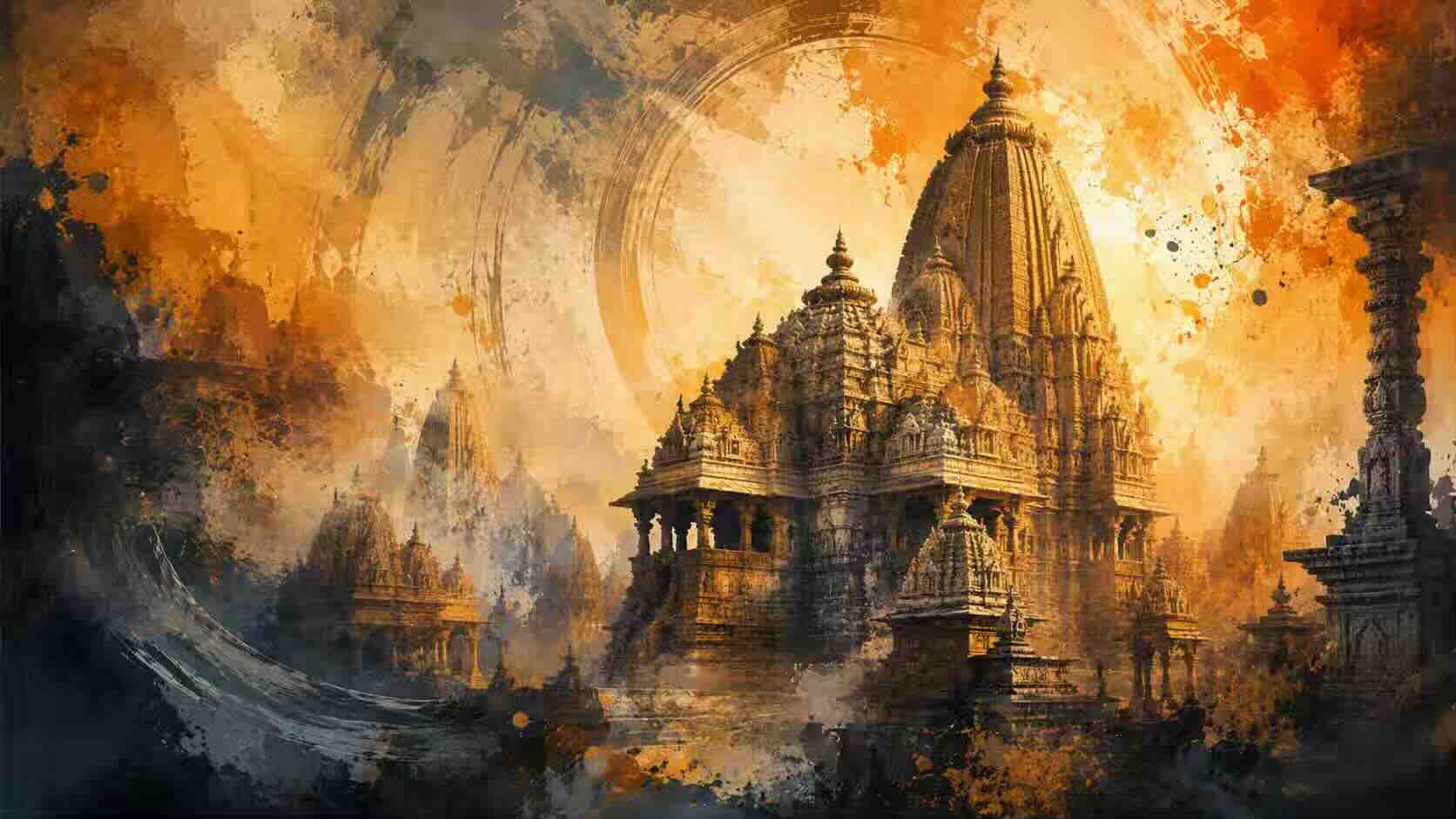
The most fascinating architectural feature of Kashi is the Kashi Vishwanath Temple complex, crowned by its gold-plated shikhara (spire). The temple follows the Nagara style of North Indian temple architecture, with a curvilinear tower rising above the sanctum that houses the Jyotirlinga of Vishweshwar.
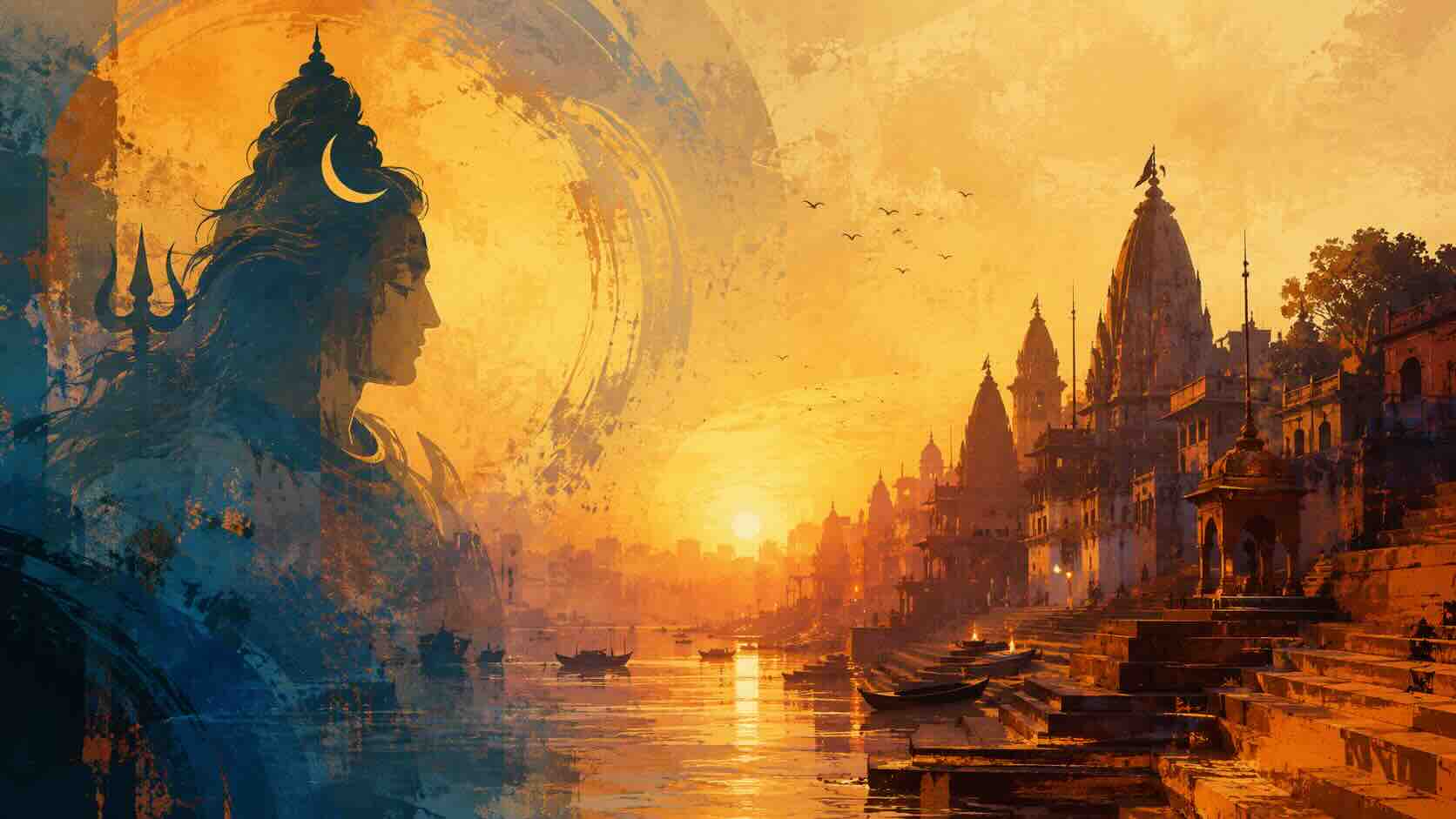
Equally remarkable is the city's sacred urban design. Kashi is not organised around a single monument; instead, it forms a ritual landscape of narrow lanes, shrines, monasteries, and ghats descending to the River Ganga. The alignment of temple spires with the riverfront creates a unique architectural and spiritual panorama found nowhere else in India.
Did You Know?
A lesser-known tradition says that Kashi rests on the trident (Trishula) of Lord Shiva, which is why it is believed to remain spiritually protected even during cosmic dissolution.
Why It Matters
Kashi remains a powerful symbol of India's living civilisational heritage. Millions of pilgrims visit the city for worship, ancestral rites, Sanskrit learning, classical music, and cultural festivals.
Even for visitors who do not share the religious belief, Kashi demonstrates how faith, architecture, water systems, and urban life evolved together over thousands of years, making it one of the world's most significant continuously inhabited sacred cities.
References
- Skanda Purana: Kashi Khanda (critical editions and reputed Sanskrit translations)
- Archaeological Survey of India (ASI) reports on Varanasi and the Kashi Vishwanath area
- P. V. Kane: History of Dharmashastra (sections on pilgrimage and sacred geography)
- Valmiki Ramayan and Mahabharat references to Kashi as an ancient kingdom and sacred region
- Government of India and Uttar Pradesh tourism and cultural heritage publications on Kashi Vishwanath and Varanasi