Quick Answer
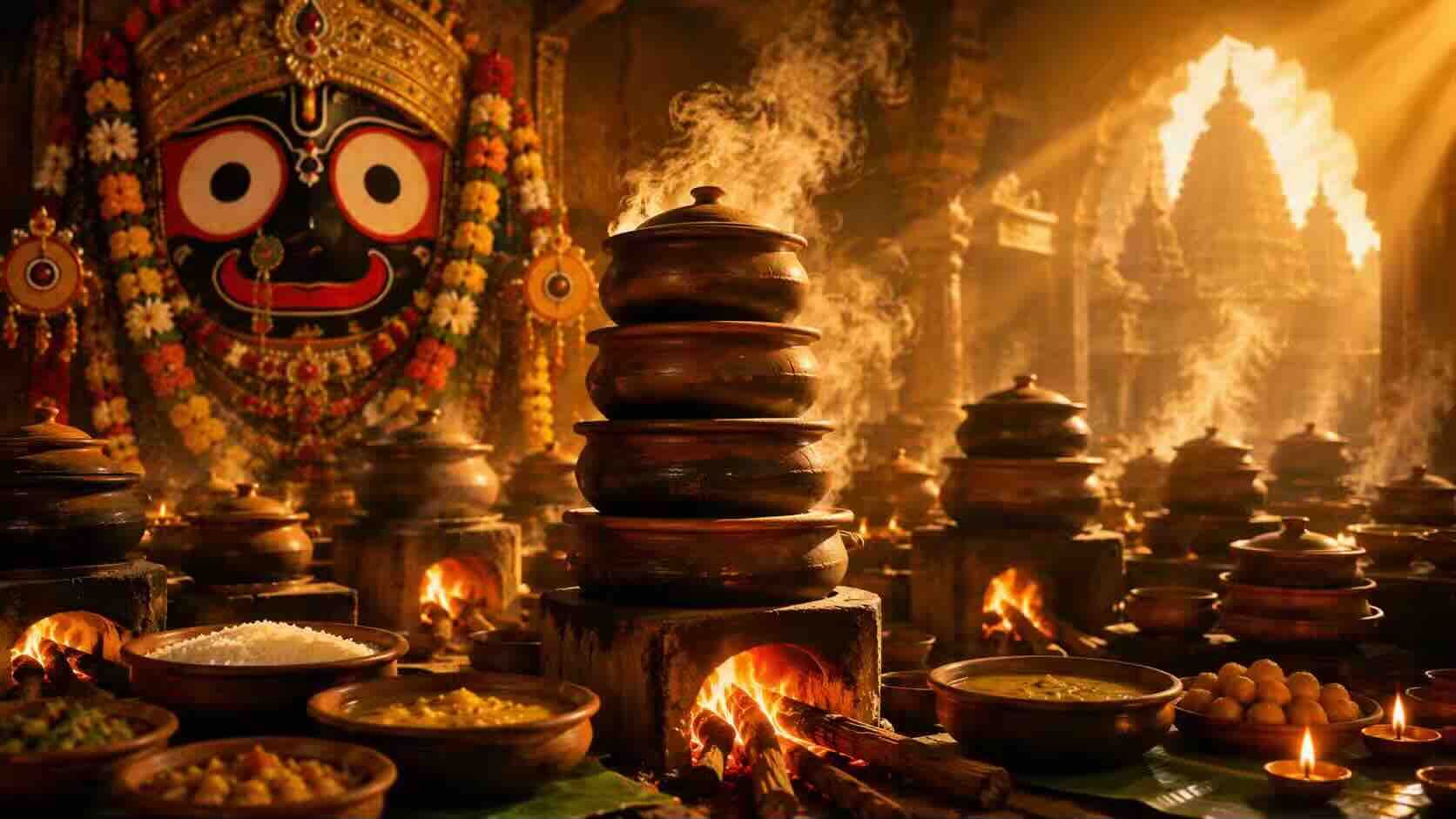
Jagannath's kitchen, called Rosaghara, is considered unique because it is believed to be the largest functioning temple kitchen in the world. Every day, food is prepared using earthen pots, wood-fired stoves, and traditional methods, and the meals are offered first to Lord Jagannath, Balabhadra, and Subhadra before being distributed as Mahaprasad to thousands of devotees.
The Story
Located inside the Jagannath Temple in Puri, Odisha, the Rosaghara has operated for centuries with remarkable consistency. Historical records and temple traditions describe hundreds of cooks and assistants working together in a highly organised system.
One fascinating feature is the way the food is cooked. Multiple clay pots are stacked one above another on a single wood-fired oven. Surprisingly, the top pot often cooks first, a phenomenon that has amazed visitors for generations. While heat circulation provides a practical explanation, devotees see it as a sign of the Lord's blessing.
The kitchen prepares a wide variety of dishes, including rice, dal, vegetables, khichdi, and sweets. After the offering ritual, the food becomes Mahaprasad, which is then served in the Anand Bazaar, where people of all backgrounds sit together and eat without social distinction.
Did You Know?
- The Rosaghara is traditionally said to have hundreds of cooking hearths.
- Mahaprasad is considered sacred for everyone, regardless of caste or social status.
- The kitchen uses earthen pots that are generally used only once, preserving both hygiene and tradition.
- During major festivals such as the Rath Yatra, the quantity of food prepared increases dramatically to serve the massive number of pilgrims visiting Puri.
Why It Matters
Jagannath's kitchen offers lessons that remain relevant in modern society:
- Community dining promotes equality.
- Sustainable cooking practices use natural materials such as clay and firewood.
- Zero-waste discipline is traditionally emphasised; food is prepared according to anticipated demand.
- The system demonstrates how large-scale food distribution can function through cooperation, skill, and trust rather than complex technology alone.
For many visitors, the experience is less about ritual and more about witnessing a living tradition of hospitality and collective service.
References
- Skanda Purana: Purushottama Kshetra Mahatmya
- Niladri Mahodaya (traditional text associated with the Jagannath Temple traditions)
- Madala Panji (traditional chronicle of the Jagannath Temple, Puri)
- Jagannath Temple Administration (Puri): official information on Rosaghara and Mahaprasad traditions
- Archaeological and cultural studies on the Jagannath Temple kitchen and Mahaprasad system