Quick Answer
Ganesh Chaturthi has ancient roots in the worship of Lord Ganesh and observances connected with Chaturthi. In Maharashtra, the festival received royal patronage under the Peshwas and was also celebrated in community settings. However, its transformation into the large public festival we recognise today took place in the late nineteenth century, especially through the efforts of Bal Gangadhar Tilak from 1893 onwards.
The Story
Lord Ganesh has been worshipped in India for many centuries. Ancient and medieval Hindu texts describe him as Ganapati, Vinayak and Vighnesh, a deity associated with wisdom, auspicious beginnings and the removal of obstacles. The Skanda Purana and Narada Purana, among other texts, contain rituals connected with the worship of Ganesh on Chaturthi.
The exact origin of Ganesh Chaturthi as a festival is difficult to place at one particular date. By the eighteenth century, however, Ganesh worship had become especially important in Maharashtra. The Peshwas of Pune, who were devoted to Ganesh, patronised elaborate celebrations. Historical accounts describe processions, music and large gatherings connected with the festival.
After the fall of the Peshwa power in 1818, this royal patronage disappeared, and Ganesh celebrations became more strongly associated with homes and local communities.
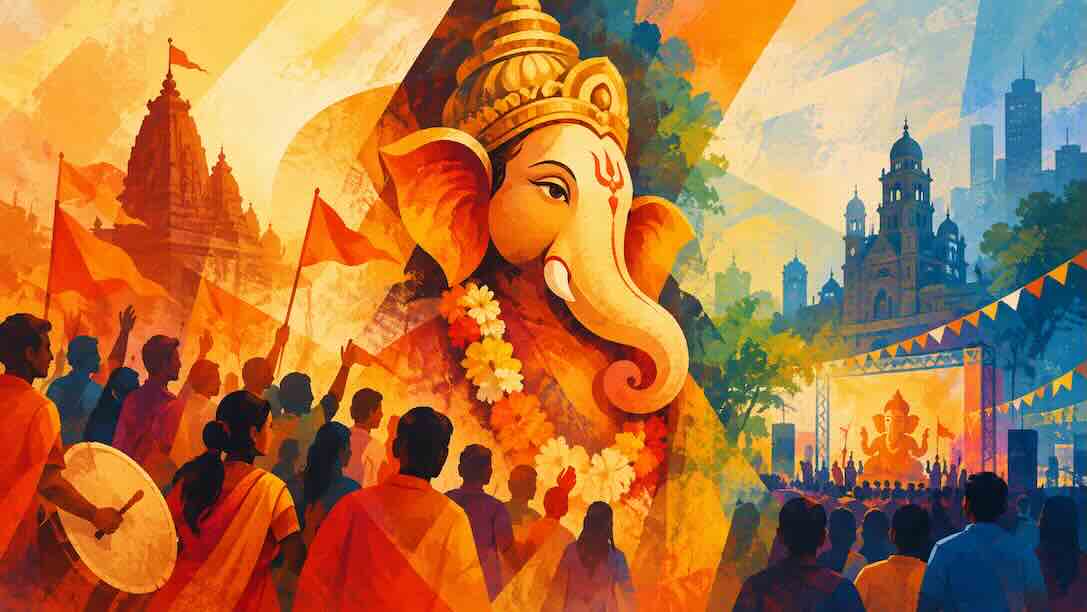
The major turning point came in the 1890s. In Pune, Bhausaheb Laxman Javale, popularly known as Bhau Rangari, organised a public Ganapati celebration in 1892. In 1893, Bal Gangadhar Tilak supported and promoted the idea through his newspaper Kesari and helped turn Ganeshotsav into a large, organised public event.
Tilak saw an opportunity beyond religious celebration. Under British rule, large political gatherings were restricted. A religious festival provided a legitimate space where people could assemble. Public Ganeshotsavs brought together people from different social groups through prayers, lectures, music, plays, poetry and processions. They also became a platform for discussing social and political issues and encouraging a sense of collective identity.
Over the twentieth century, the tradition spread far beyond Pune and Maharashtra. Today, Ganesh Chaturthi combines worship, art, music, community participation and public celebration. The familiar installation of clay idols followed by immersion also reminds devotees of the temporary nature of physical forms.
Did You Know?
The public festival was not invented by Tilak from nothing. Ganesh worship and festival traditions already existed, and public celebrations had earlier precedents. Tilak's major contribution was to organise, expand and give the festival a powerful public and nationalist character.
Why It Matters
Ganesh Chaturthi shows how a religious tradition can acquire new meanings as society changes. Its modern history connects faith with cultural expression and India's freedom movement. At the same time, remembering its older roots helps us see that today's grand public celebrations are only one chapter in a much longer history of Ganesh worship.
References
- Skanda Purana: References to the worship of Ganapati on Chaturthi and associated rituals.
- Narad Purana: Chapter 113, The Exposition of the Holy Rites to be Performed on Caturthis, including Ganesh-related Chaturthi observances.
- Ganesh Purana: Important source for the development of Ganesh's religious traditions and Ganapatya worship.
- Kesari: Bal Gangadhar Tilak's newspaper, through which he promoted the public Ganeshotsav in the 1890s.