Quick Answer
Buddha Purnima is celebrated to commemorate the birth, enlightenment, and Mahaparinirvana of Gautama Buddha. It falls on the full moon day (Purnima) of the Hindu month of Vaishakha (April-May) and is one of the most important festivals in the Buddhist tradition.
In India, it is also widely known as Buddha Jayanti.
The Story
According to Buddhist tradition, Prince Siddharth Gautam was born in Lumbini (present-day Nepal) around the 6th century BCE. Although he grew up in royal comfort, he became deeply troubled after witnessing old age, sickness, and death.
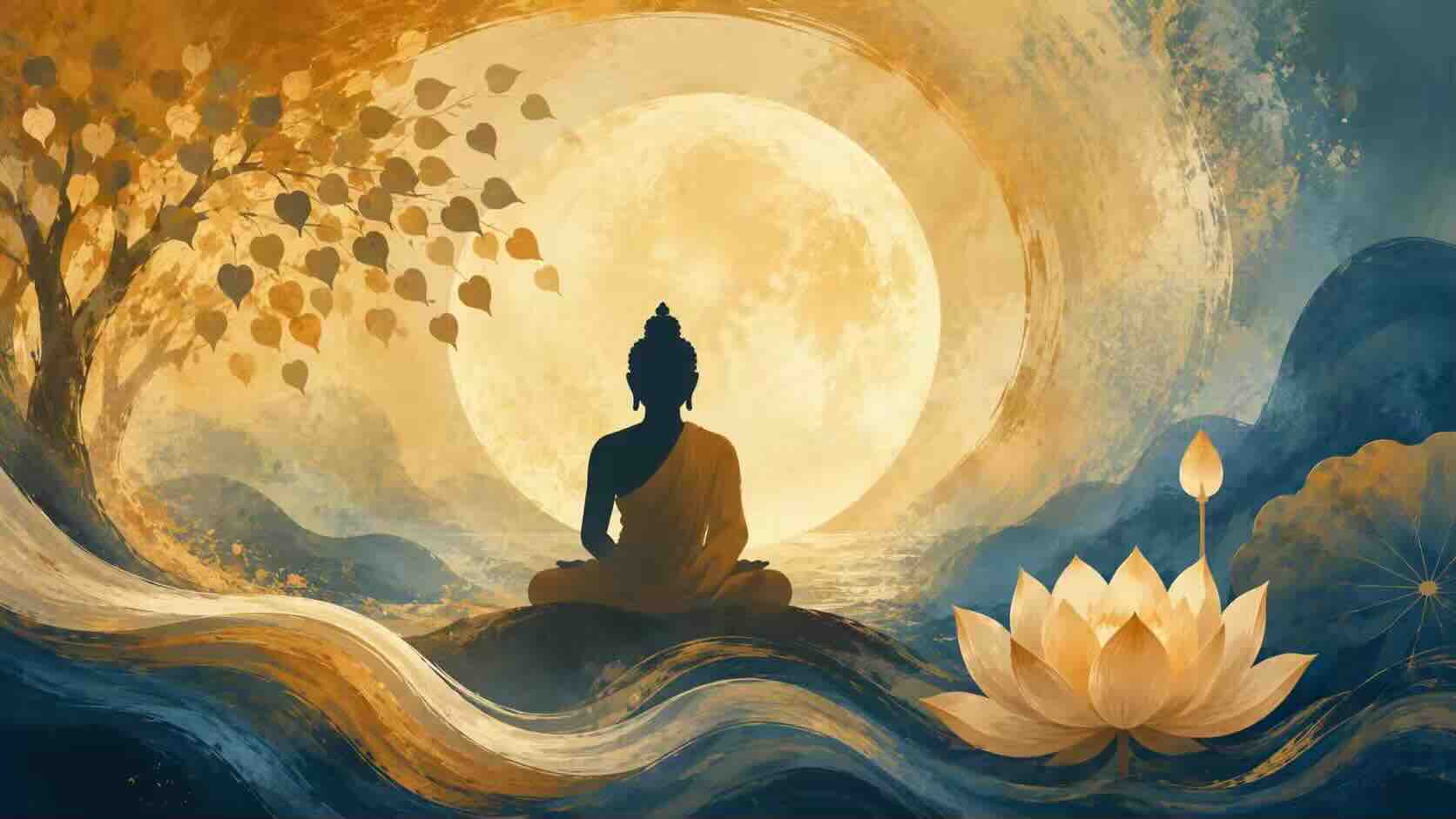
Seeking answers to human suffering, Siddharth left his palace and spent years in spiritual search. Finally, while meditating under the Bodhi tree at Bodh Gaya, he attained enlightenment and became known as the Buddha, meaning "the Awakened One."
He then spent the rest of his life teaching the Middle Path, encouraging people to live with wisdom, compassion, mindfulness, and non-violence. Buddhist traditions also remember that he attained Mahaparinirvana at Kushinagar, and these sacred events are associated with the Vaishakha full moon.
Did You Know?
- Buddha Purnima is also called Buddha Jayanti in many parts of India.
- The Mahabodhi Temple at Bodh Gaya, where Buddha attained enlightenment, is a UNESCO World Heritage Site.
- Emperor Ashok played a major role in spreading Buddhist teachings across India and Asia after embracing Buddhism.
- The festival is observed not only in India, but also in Sri Lanka, Nepal, Thailand, Myanmar, Japan, and several other countries.
Why It Matters
Buddha Purnima carries a universal human message.
- Mindfulness helps us live with greater awareness.
- Compassion encourages kindness towards all living beings.
- Non-violence and moderation remain deeply relevant in a world often marked by conflict and excess.
Across India, people visit monasteries, meditate, offer flowers and lamps, read teachings of the Buddha, and participate in acts of charity such as donating food, clothes, or medicines. The festival highlights the Indian civilisational ideal that inner transformation can lead to social harmony.
References
- Digha Nikaya: Early Buddhist text containing accounts related to the Buddha's life and teachings.
- Mahaparinibbana Sutta: Traditional source describing the Buddha's final days and Mahaparinirvana.
- Vinaya Pitaka: Early Buddhist monastic literature.
- UNESCO: Mahabodhi Temple Complex, Bodh Gaya: Historical and cultural significance of the enlightenment site.
- Government of India, Ministry of Culture: Information on Buddha Purnima and Buddhist heritage in India.