Quick Answer
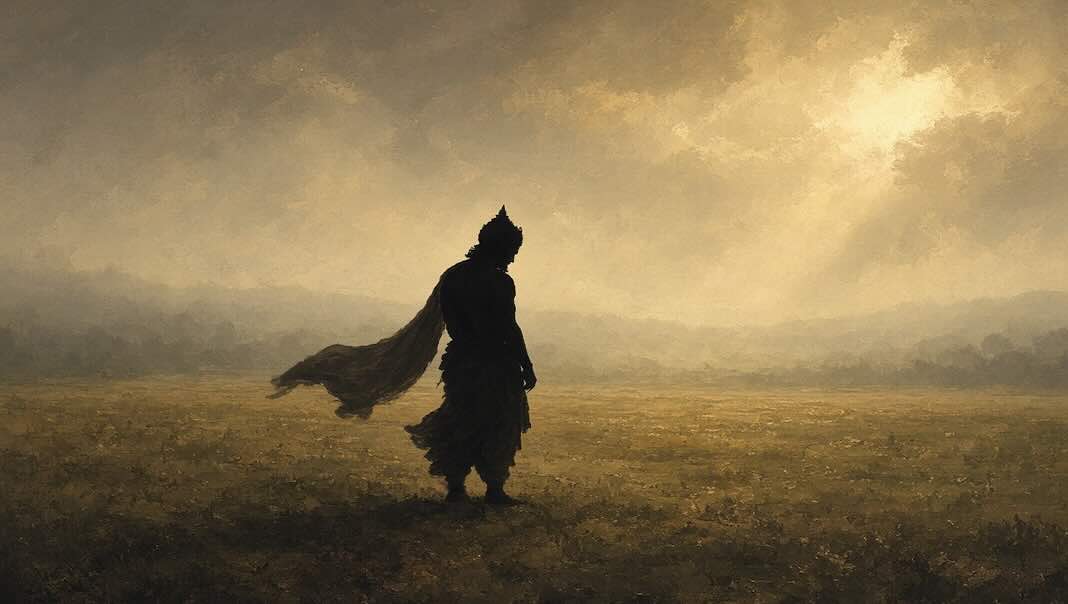
Kuru was an ancient king of the Bharat dynasty and the ancestor of the Kuru lineage to which the Pandavas and Kauravas belonged. He was the son of King Samvaran and Tapati, the daughter of Surya. Kuru became especially famous for cultivating the land that came to be known as Kurukshetra, the "field of Kuru."
The Story
Kuru belonged to the celebrated Bharat lineage. The Mahabharat traces the line through Bharat, Bhumanyu, Suhotra, Hasti, Ajamidha, Riksha and Samvaran. Samvaran married Tapati, daughter of Surya, and their son was Kuru. The Mahabharat describes Kuru as exceptionally virtuous and says that his people installed him as king.
He belonged to the Chandravansh, or Lunar Dynasty, specifically the Puru-Bharat branch. Puru was one of the five sons of King Yayati and became the ancestor of the Paurava lineage. Many generations later, King Dushyant and Shakuntala's son, Bharat, was born into the Puru lineage, and the dynasty came to be known as the Bharat lineage after him. Kuru was a later descendant of Bharat. This contrasts with Shri Ram, who belonged to the Suryavansh, or Solar Dynasty.
Kuru became especially associated with a particular region known as Kurukshetra. The Mahabharat says that he devoted himself to austerities there and made the field sacred. Later, in the Shalya Parva, the sages explain to Balaram that Kuru had cultivated this land for many years.
The Mahabharat gives a striking reason for his effort. When Indra asked Kuru why he worked so persistently, Kuru replied that he wanted those who died on that field to attain blessed realms after being cleansed of their sins. Indra initially treated the idea lightly, but ultimately granted Kuru's wish. The Mahabharat further describes Kurukshetra as an exceptionally sacred region where austerities, charity and sacrifices were believed to bring great merit.
The Vaaman Purana preserves a more elaborate tradition. It describes Kuru ploughing the land with a golden plough and seeking to cultivate eight virtues: austerity, truth, forgiveness, compassion, purity, charity, yoga and brahmacharya (self-discipline). Vishnu tested Kuru's determination, and Kuru demonstrated that he was prepared to give even his own body for his ideal. Pleased with his dedication, Vishnu granted him the blessing that the land would bear Kuru's name and remain sacred.
Thus, Kuru's name became permanently connected with Kurukshetra, the very field where, generations later, the Pandavas and Kauravas would meet in the great war.
Did You Know?
The name Kurukshetra literally means "the field of Kuru." The Mahabharat also calls the region Dharmakshetra, or the "field of Dharma," at the opening of the Gita.
Why It Matters Today
Kuru's story presents leadership as more than ruling a kingdom. His legacy is connected with long-term thinking, perseverance and the cultivation of values. Whether read as sacred tradition or epic literature, the story asks an enduring question: What are we leaving behind through the things we choose to cultivate today?
References
- Mahabharat
- Adi Parva, Sambhava Parva, Section 94: Kuru's birth from Samvaran and Tapati, his virtues, kingship and association with Kurukshetra.
- Adi Parva, Sambhava Parva, Sections 95-96: Genealogy leading from Bharat through Samvaran to Kuru and onward towards the later Kuru dynasty.
- Shalya Parva, Section 53: Kuru's cultivation of Kurukshetra and Indra's granting of the sacred boon associated with the field.
- Vaaman Purana
- Adhyaya 22: Traditional account of Kuru's cultivation of Kurukshetra and the eight virtues associated with the land.