Quick Answer
Lord Kalki is described in Hindu scriptures as the future tenth avatar of Lord Vishnu, who will appear at the end of Kali Yuga to restore dharma and prepare the way for Satya Yuga (Satyuga). Kalki Jayanti is observed on Shravan Shukla Shashthi, traditionally associated with the future birth of Kalki.
The Story
Hindu philosophy describes time as a cycle of four Yugas: Satya, Treta, Dvapara and Kali. Kali Yuga is the final and most difficult phase of this cycle, when righteousness gradually declines and selfishness, injustice and disorder increase.
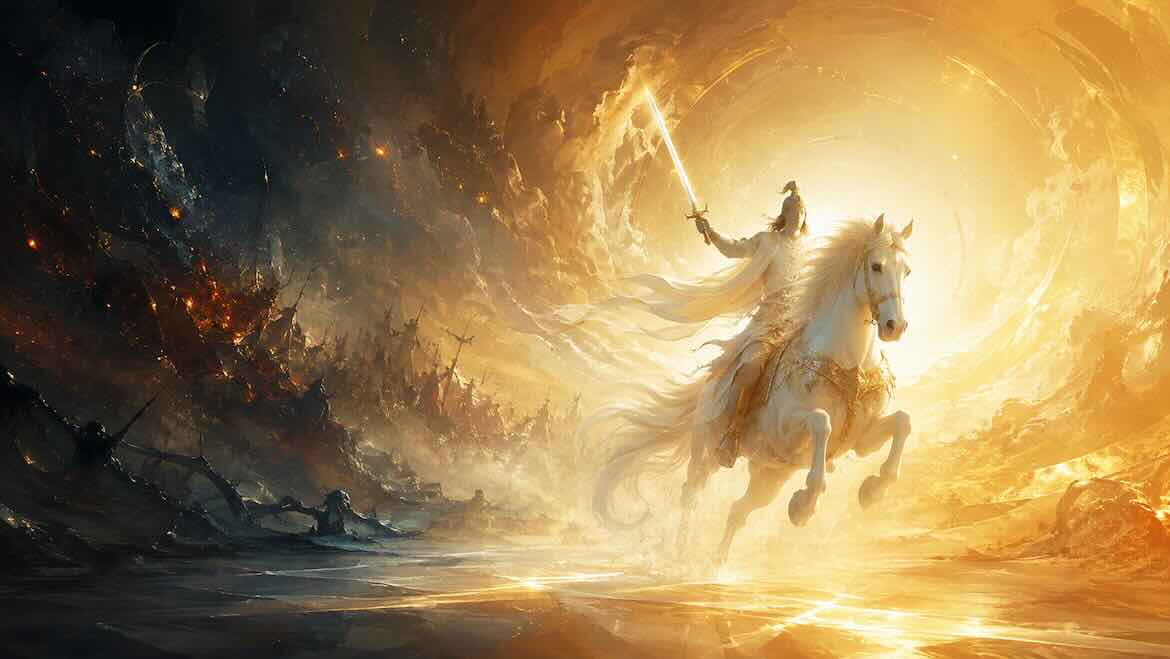
The Bhagavat Purana says that when this decline reaches its final stage, Vishnu will appear as Kalki. He will be born in Shambhala, in the house of a noble Brahmana named Vishnuyasha. The scripture describes Kalki riding a swift white horse named Devadatta and carrying a sword.
The Kalki Purana, a later Vaishnav Upapurana, expands this brief prophecy into a much larger narrative, describing Kalki's education, battles, marriage and role in restoring dharma.
His Education and Training
According to the Kalki Purana, Kalki receives knowledge of the Vedas, scriptures, dharma and various branches of learning. He is also trained in warfare and the use of divine weapons.
A particularly important figure in his education is Lord Parashuram. Traditionally regarded as a Chiranjeevi, or immortal being who continues to live through the ages, Parashuram is described in the Kalki Purana as teaching Kalki martial skills and the use of divine weapons.
Kalki also becomes associated with his famous white horse, Devadatta, and his divine sword.
His Battles
Kalki's campaigns against rulers and forces that have abandoned dharma and spread oppression and disorder. He defeats the forces that have allowed injustice to dominate society and establishes conditions in which dharma can flourish again.
His Marriage
The Kalki Purana also describes Kalki's marriage to Padma, the daughter of King Brihadratha of Simhala.
According to the narrative, Padma chooses Kalki as her husband at her svayamvara. Their marriage becomes an important part of Kalki's larger story before his final campaign against the forces of adharma.
Restoration of Dharma
The ultimate purpose of Kalki's appearance is the restoration of dharma.
After the forces of adharma are defeated, righteousness, truth and justice are restored. The cycle of time then moves towards Krita or Satya Yuga, the age traditionally associated with truth and virtue.
Kalki Jayanti therefore celebrates the promise of dharma's restoration, rather than the birthday of a deity believed to have already appeared.
Did You Know?
- The Kalki avatar is unusual among Vishnu's major avatars because tradition regards him as still awaiting his appearance. The Bhagavat Purana describes him in the future, making Kalki a powerful symbol of hope at the end of a cosmic cycle.
- Not every detail of Kalki's story comes from the same ancient scripture. The Shrimad Bhagavata Purana and Vishnu Purana provide relatively brief descriptions of Kalki's future appearance, while the Kalki Purana, a later text, expands the story considerably.
Why It Matters
Kalki's story is ultimately about the Hindu idea that dharma can decline, but it is never permanently defeated.
For modern readers, the story can also be understood as a reminder to protect truth, fairness and responsibility before disorder becomes overwhelming.
References
- Shrimad Bhagavat Purana: Skandha 12, Chapter 2, especially verses 16-24.
- Vishnu Purana: Book 4, Chapter 24.
- Kalki Purana: Especially its opening sections describing Kali Yuga and the appearance of Kalki.